Ju Young Kim talks to Phillip Edward Spradley
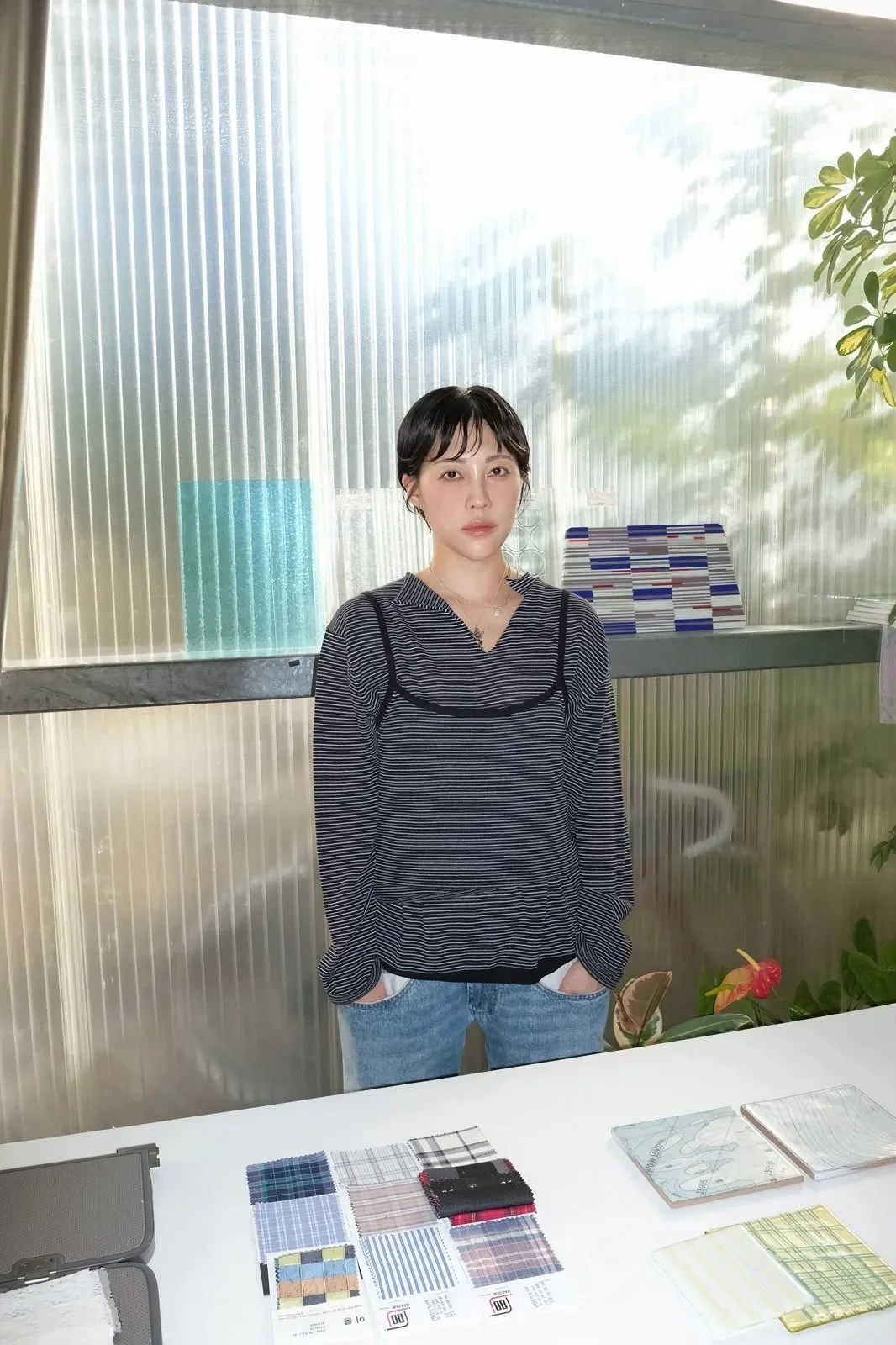
Portrait Ju Young Kim, 2026 | Photo: Studio Ju Young Kim
Few experiences embody the paradoxes of contemporary life as completely as travel. It is defined by destination, yet so much of a traveler’s experience is spent waiting. We move across cities, countries, and continents while remaining motionless for hours. Airports, train stations, cabins, highways, waiting rooms, and hotel rooms become temporary environments where the rhythms of ordinary life are suspended. Time becomes elastic. Geography turns abstract. For a moment, you belong neither entirely to the place you have left behind nor to the one ahead.
Travel is not simply movement from one point to another. It is also the experience of being in between. Departure and arrival may structure a journey, but much of its psychological weight unfolds within the intervals: waiting to leave, watching landscapes pass, sitting among strangers, navigating unfamiliar systems, or occupying spaces designed only to be passed through. Movement and stillness become strangely inseparable.
Artist Ju Young Kim works within this suspended territory. Airplanes, luggage, transit systems, routes, and the familiar objects and architectures of travel populate her sculptures and installations. Though movement itself is rarely the true subject. Looking more closely, Kim seems less interested in transportation than in the psychological and emotional states it produces. Her work considers what happens when we exist between locations, temporalities, and systems of belonging.
Her sculptures frequently inhabit the spaces created by these interruptions. Cabin interiors, waiting lounges, corridors, thresholds, and other transitional architectures appear throughout her work. These environments are designed to facilitate movement but are equally defined by pause. In Kim’s hands, the distinction between motion and immobility begins to collapse. To travel is not simply to move forward. It is also to wait, observe, remember, anticipate, and temporarily surrender yourself to systems beyond your control.
For Kim, these states of suspension are not simply reflections of personal experience. They become places where memory, architecture, technology, and intimacy intersect. Her work suggests that some of the most revealing experiences of contemporary mobility are found not in movement itself, but in the intervals it creates: the hours spent waiting, the landscapes passed without inhabiting them, and the temporary environments that belong fully to neither departure nor destination.
If travel has traditionally been imagined as passage from one place to another, Kim’s sculptures complicate that trajectory. Meaning does not necessarily reside in where we leave or where we arrive. Sometimes it emerges in the uncertain space between the two, while we are still in transit.
Kim lives and works in Munich. She earned a Master's degree in Sculpture from the Academy of Fine Arts Munich. Her work has been exhibited internationally at the Alexander Tutsek-Stiftung; ERES Stiftung; Kunsthalle Recklinghausen; Kunsthalle Mannheim; Funkhaus Berlin; Galerie Irrgang; TICK TACK; Gallery Hyundai, and P21, among others. Her work is held in the collections of Kunsthalle Recklinghausen, the J. Patrick Collins Collection, the Alexander Tutsek-Stiftung, and Sammlung Stadler.
Kim’s exhibition at max goelitz, addresses without names, opened September 17 and runs through October 31, 2026.
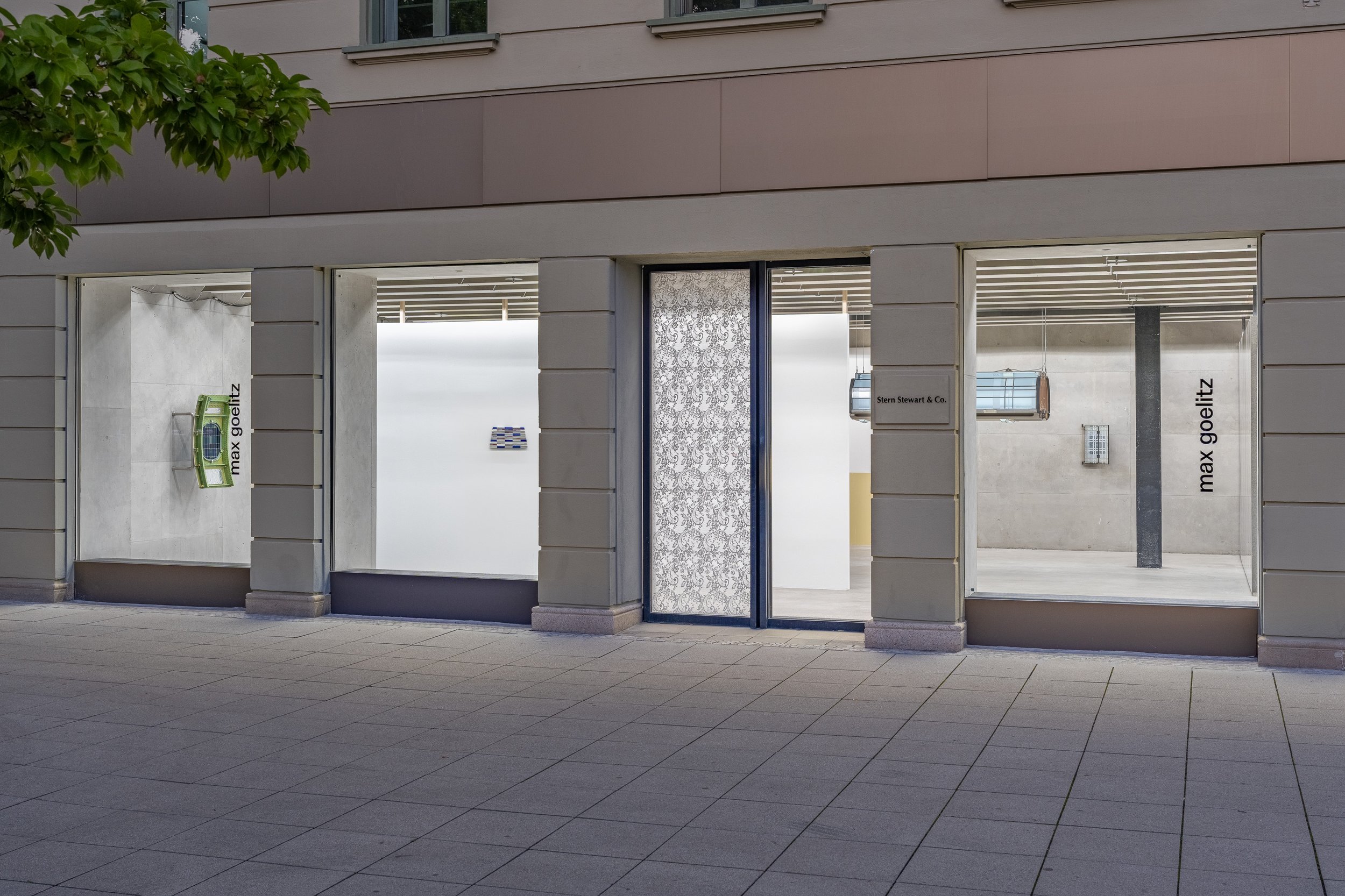
Installation view, addresses without names, 2026. Image Courtesy of max goelitz. Photo by Dirk Tacke
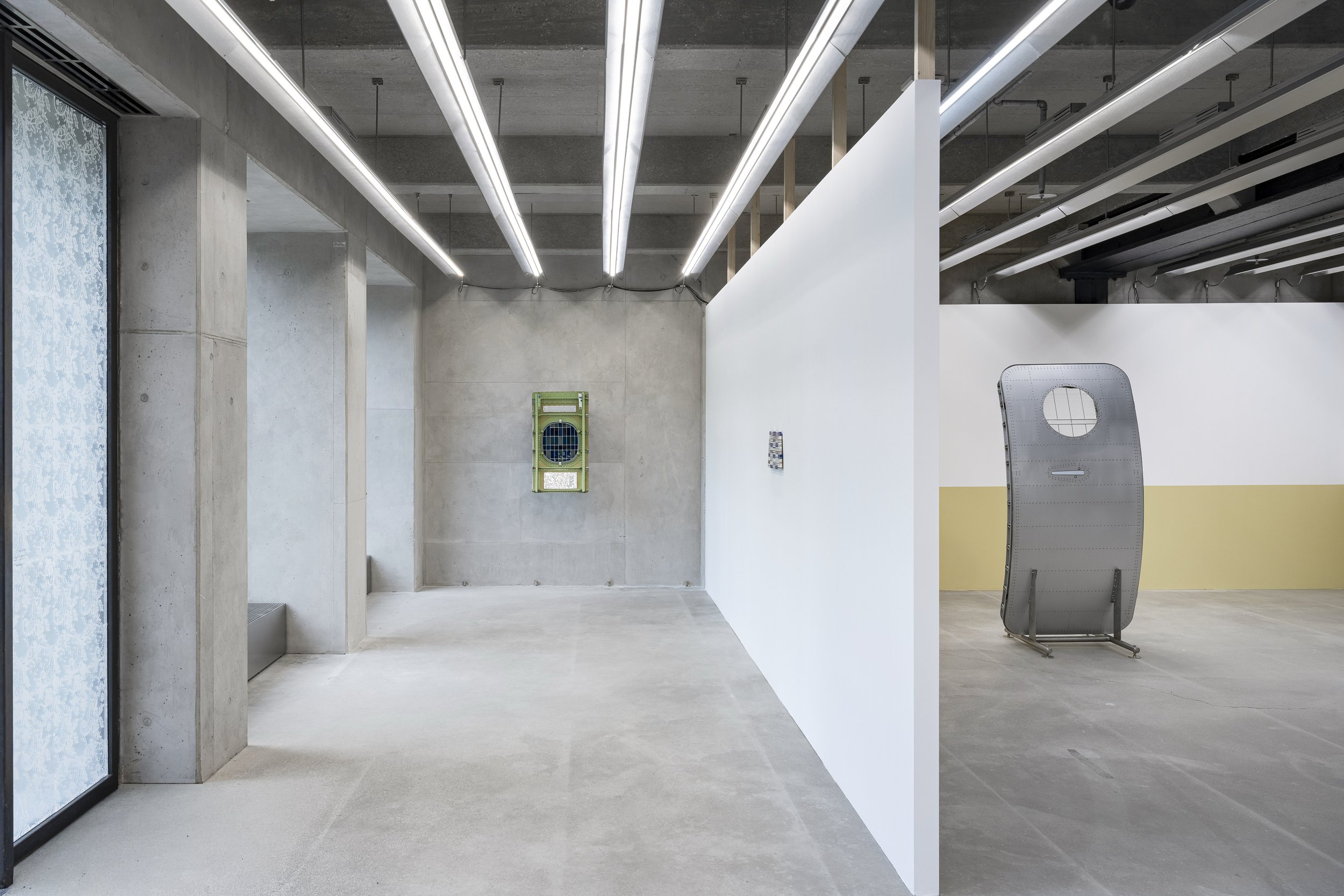
Installation view, addresses without names, 2026. Image Courtesy of max goelitz. Photo by Dirk Tacke
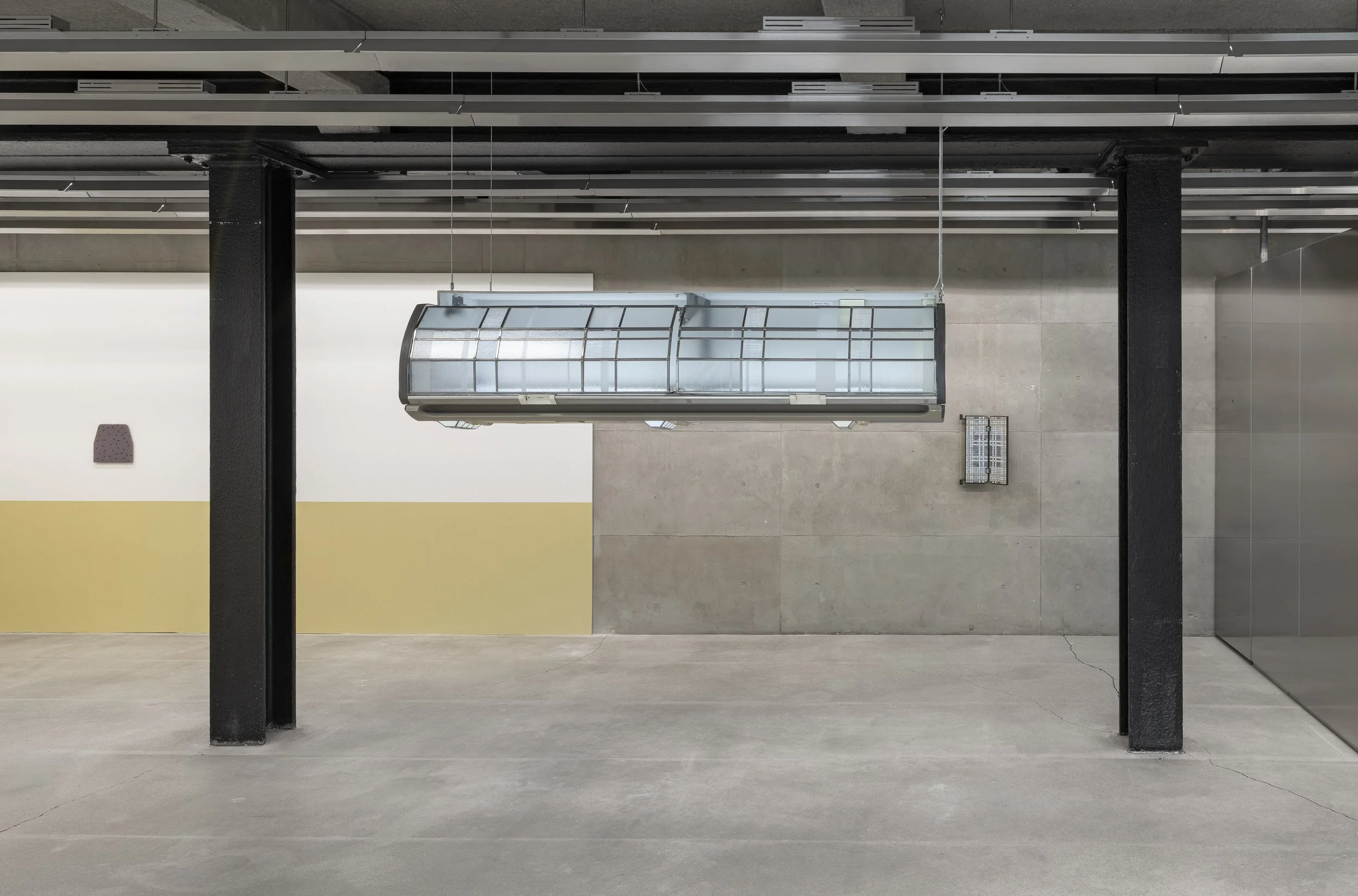
Installation view, addresses without names, 2026. Image Courtesy of max goelitz. Photo by Dirk Tacke
Phillip Edward Spradley: What was the genesis of address without names? Where did the idea come from, and what initially drew you to this notion of places that can be located or remembered, yet remain unnamed?
Ju Young Kim: addresses without names is closely connected to my experience of moving between different countries and repeatedly having to establish myself in a new place. Whenever you move somewhere, one of the first things you receive is an address. You register yourself there, your name appears on the doorbell or the nameplate, and somehow these very simple administrative gestures confirm that you occupy this place and belong there, at least for a certain period of time.
I started thinking about the strange hierarchy within these systems of locating ourselves. An address connects a name to a fixed place, but when you travel, that relationship changes. On an airplane, for example, you temporarily occupy another kind of address: 1A, 9B, 14C. For those hours, that number and letter locate you more precisely than your name does. You occupy a very specific space, but it is temporary and anonymous. Someone else occupied it before you, and someone else will take your place afterward. Hotels, trains, waiting rooms, or temporary apartments operate in similar ways. They situate your body very precisely for a limited period without necessarily becoming permanent points of reference.
At the same time, I became interested in how strangely familiar these temporary environments can become. Even if you don't remember a specific airplane cabin, hotel room, or train, you might recognize the texture of a seat fabric, a curtain, a reading light, or a certain pattern immediately. I think of this as a kind of “anonymous familiarity”—you recognize something, perhaps even bodily or emotionally, without being able to locate exactly where that recognition comes from.
This is also very close to how my understanding of home has changed through moving. I remember many temporary places through fragments: a room, a particular light, a blanket, a pattern on a seat, the feeling of waiting somewhere. Sometimes these details remain much more vivid than the actual address. And over time, memories from public and domestic spaces begin to overlap. A pattern from public transportation might remind me of a blanket from childhood, for example.
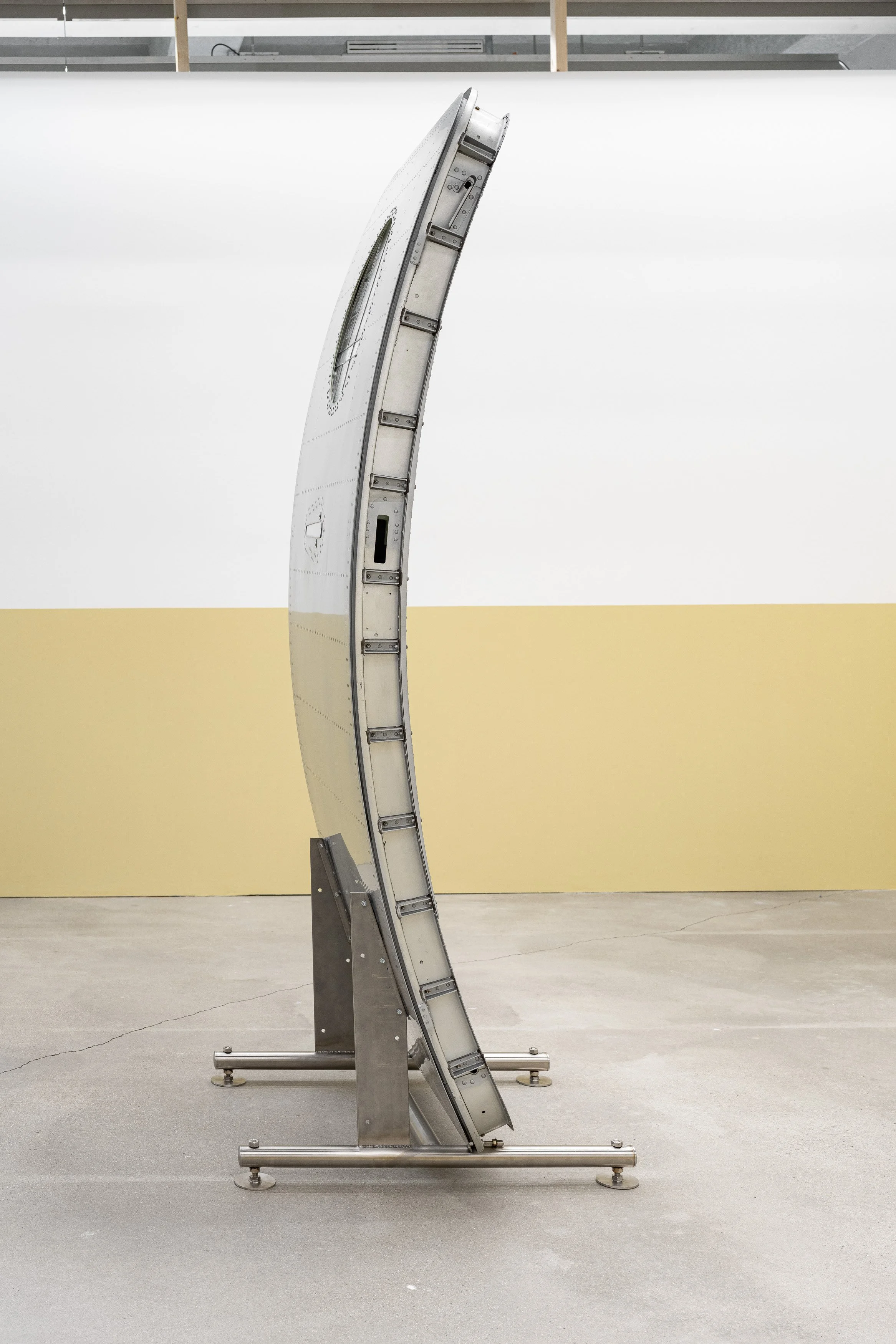
Names behind the sun-faded plastic, 2026. Aircraft exterior door, printed glass assembled with lead and, tin, stainless steel, 200 x 92 x 78 cm. Image Courtesy of max goelitz. Photo by Dirk Tacke
You recently completed a residency with the Pilchuck Glass School. How did that experience there inform some of your thinking about process and material?
Pilchuck was a very important experience for me because I had the time and space to experiment with glass in a much more open way. Before I had mainly worked with stained glass, but there I started exploring fusing and kiln forming much more. I began cutting different colored glass into thin strips and fusing them together, almost like weaving a textile. I was looking at patterns from public transportation, seat fabrics, curtains, blankets, and other familiar surfaces.
I really liked translating something soft and familiar into glass, which is hard and fragile. A lot of these experiments developed quite naturally into the new works for Addresses without Names. It opened up another way for me to work with memory and familiarity through pattern and material.
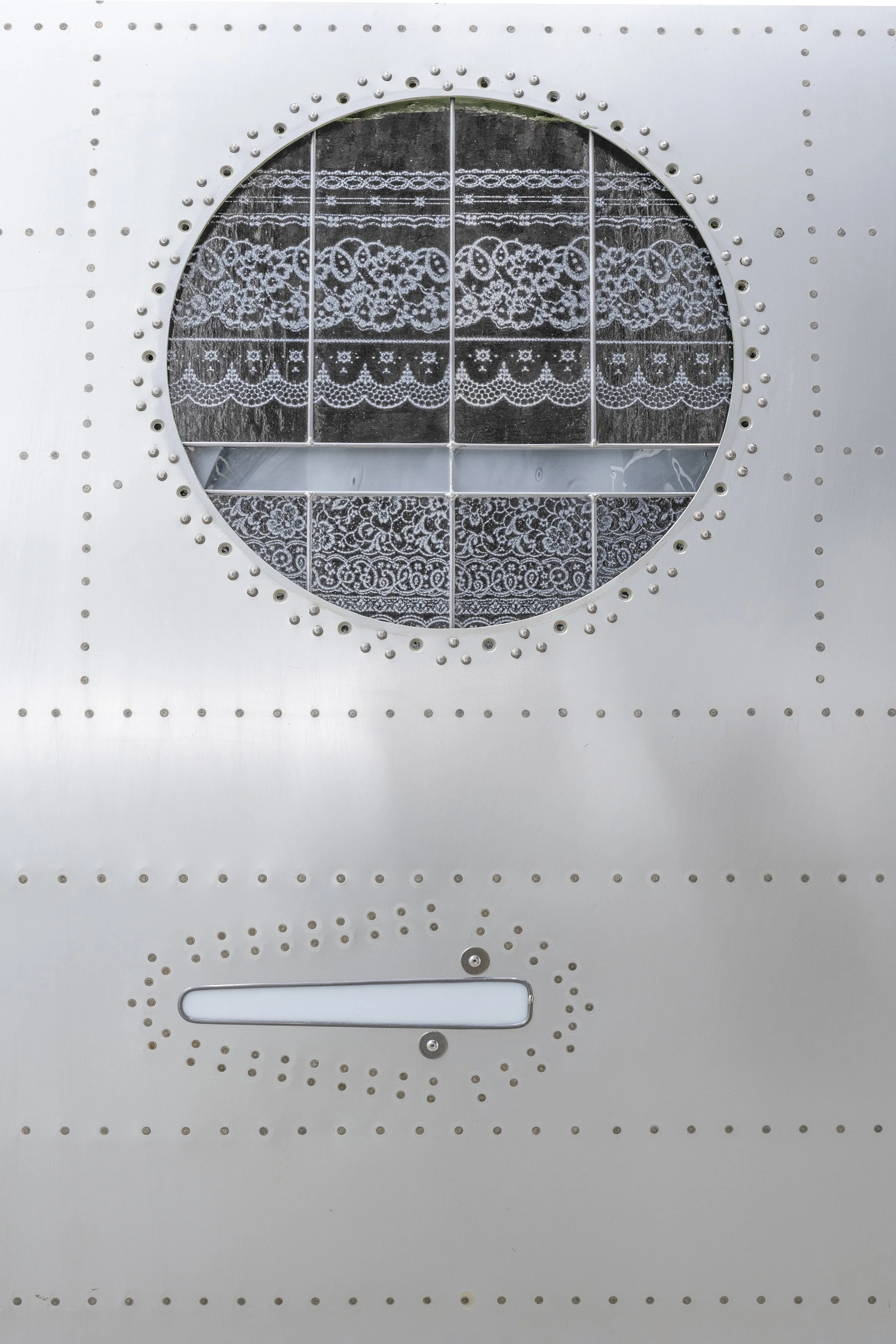
Names behind the sun-faded plastic, 2026. Aircraft exterior door, printed glass assembled with lead and, tin, stainless steel, 200 x 92 x 78 cm. (detail) Image Courtesy of max goelitz. Photo by Dirk Tacke
When thinking about your previous work and where you are now, what are some of the ideas or questions that you feel went into building this exhibition and how have some of those ideas evolved?
I see the exhibitions as part of one continuous body of work rather than separate chapters. Holding Lounge, addresses without names, and the earlier works from AEROPLASTICS are different ways of approaching the same larger questions around movement, distance, architecture, and how our bodies are positioned within these systems.
What changes from exhibition to exhibition is more the perspective and the material language. Recently I have been looking at these questions in a more body oriented and haptic way. I am thinking more about surfaces we touch, sit on, lean against, or see repeatedly, and how these physical and sensory experiences stay with us. This is also why textile structures, upholstery patterns, curtains, glass surfaces, and light have become more present in the work.
So I think I am constantly adding new layers rather than leaving previous ideas behind. Sometimes the work is very architectural and structural, and sometimes it becomes much more intimate and connected to touch, sensation, or bodily memory.
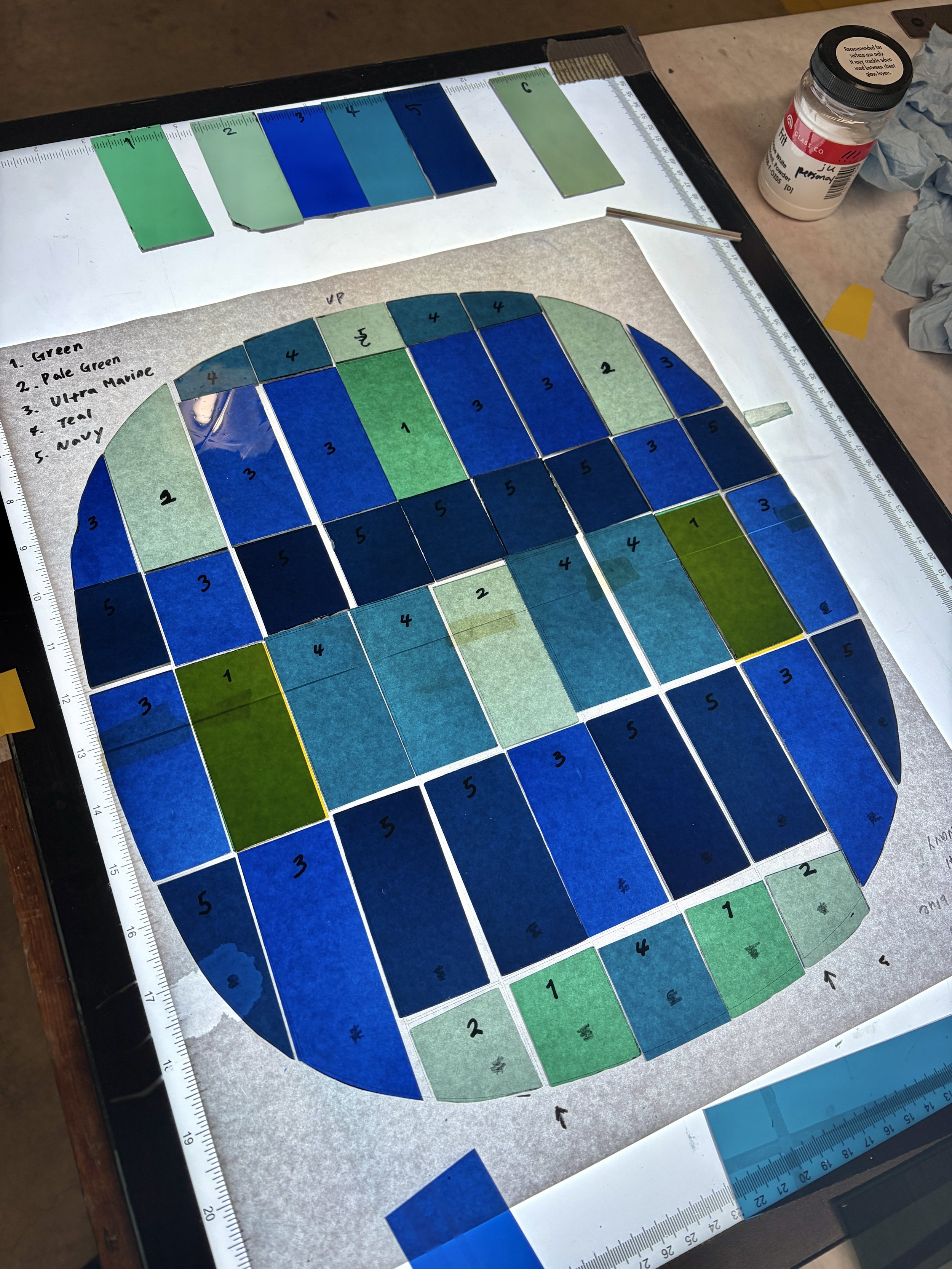
Work in progress at Pilchuck School of Glass, 2026 | Photo: Studio Ju Young Kim
With travel comes ample time for exploration and reflection. The movement can often become less about destinations and more about suspension, those moments between departure and arrival. How did you find yourself navigating the particular states of consciousness that transit seems to produce?
This was something I was specifically dealing with in Holding Lounge. I was interested in this strange condition where you are traveling, but at the same time you are being held somewhere. You are waiting in a lounge, sitting inside an airplane, or staying somewhere between connections, and your movement is completely determined by a schedule that you cannot really control.
That is also where the title Holding Lounge came from for me. You are in a space where you stay temporarily, but you are also somehow being held there. Your body can be completely still while you are moving an enormous distance, or mentally already somewhere else while physically waiting to leave.
I find this suspended state very particular. The normal rhythm of time becomes unclear, and your attention shifts. You start noticing small things around you, the changing light, sounds, surfaces, the person next to you, or what you see through the window. I don't really see this as empty time between departure and arrival. For me, this suspended period has its own space, rhythm, and experience.
The spaces that recur in your work are often designed to facilitate movement, yet they are fundamentally spaces of waiting. What initially drew you to these environments, and what do they reveal about contemporary life that more permanent forms of architecture do not?
I think these spaces are almost the other side of the coin when we talk about movement. We usually imagine travel through speed, distance, departure, and arrival, but actually so much of the experience is about waiting. You wait at the airport, at the gate, inside the airplane, between connections. There are all these suspended moments in between the actual movement.
That contradiction is what initially drew me to these environments. They are designed entirely around circulation and movement, but our bodies spend so much time being still inside them. And during this waiting, very ordinary things happen. We eat, sleep, work, get bored, watch other people, or just sit next to a stranger for hours. For me, these moments are not secondary to the journey. They are actually a large part of how we experience it.
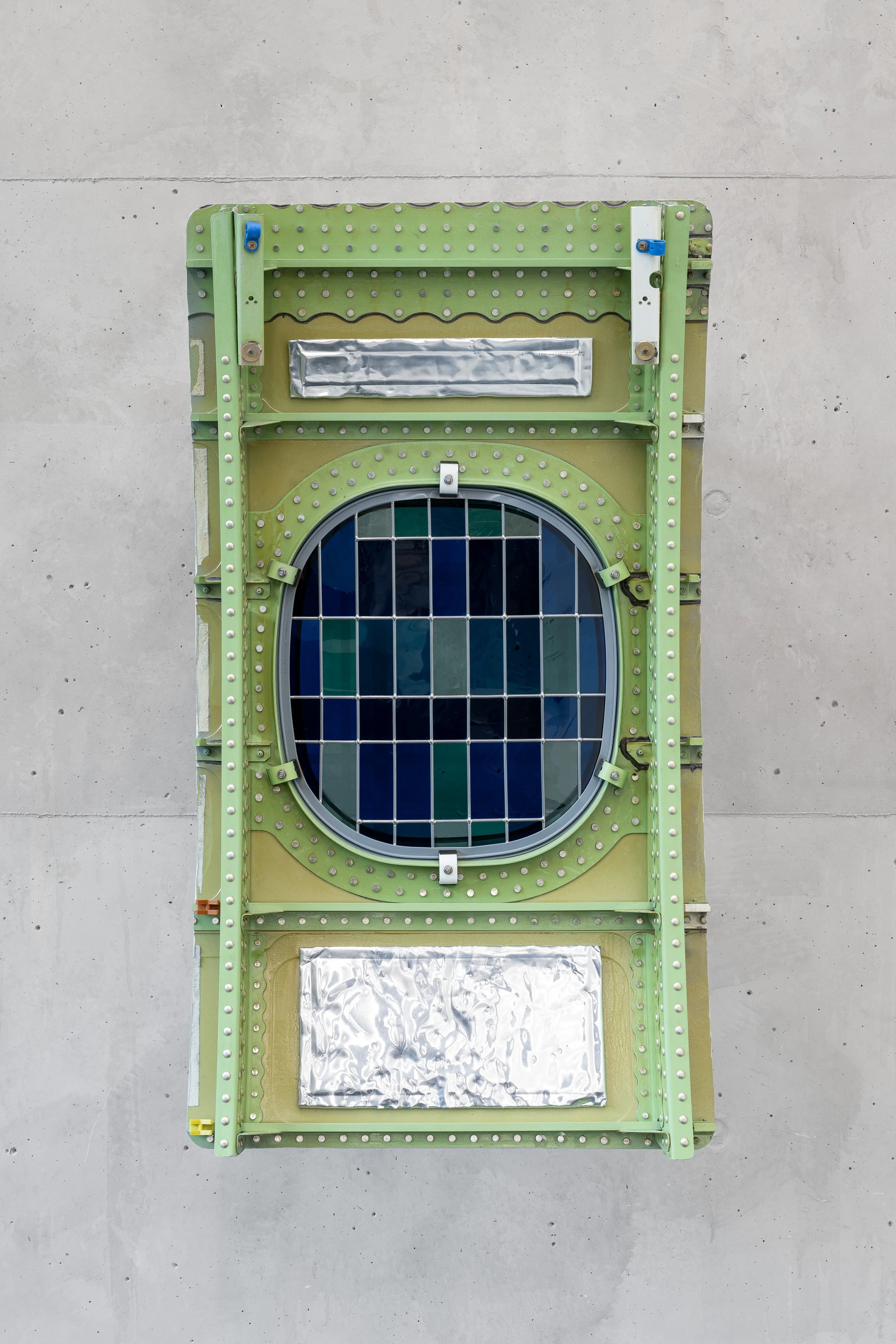
She always sat on the same side of the table, 2026. Aircraft exterior window, colored and sanded glass assembled with lead and tin, stainless steel, 97 x 54.5 x 50 cm. Image Courtesy of max goelitz. Photo by Dirk Tacke
Many of your works transform utilitarian objects and industrial materials into something unexpectedly intimate and begin to feel almost domestic. What interests you about this shift from infrastructure to personal experience?
I often think that the objects we experience inside an airplane are almost like ghost versions of the furniture and objects we use in everyday life. There is a table, a chair, a window, a lamp, a cabinet, even something like a small room, but everything has been simplified, compressed, and adapted to function as efficiently as possible within the system.
I don't mean that they are downgraded versions. They are actually highly designed and engineered, but they have been stripped down to what is necessary. A tray table still performs the basic function of a table, for example, but almost everything we normally associate with a table as a domestic object has disappeared.
Then I add another architectural and material layer onto these objects, often using stained glass, ceramic, metal, or other handcrafted elements. In a way, these materials work almost against the original personality of the aircraft component. The original objects are designed to be lightweight, durable, efficient, and easily reproduced, while glass and ceramic can be heavy, fragile, and very slow to make.
I really like the tension that happens there. The object still carries the logic of transportation and engineering, but another logic is placed on top of it. It can start to feel like furniture, architecture, or something more intimate and precious.
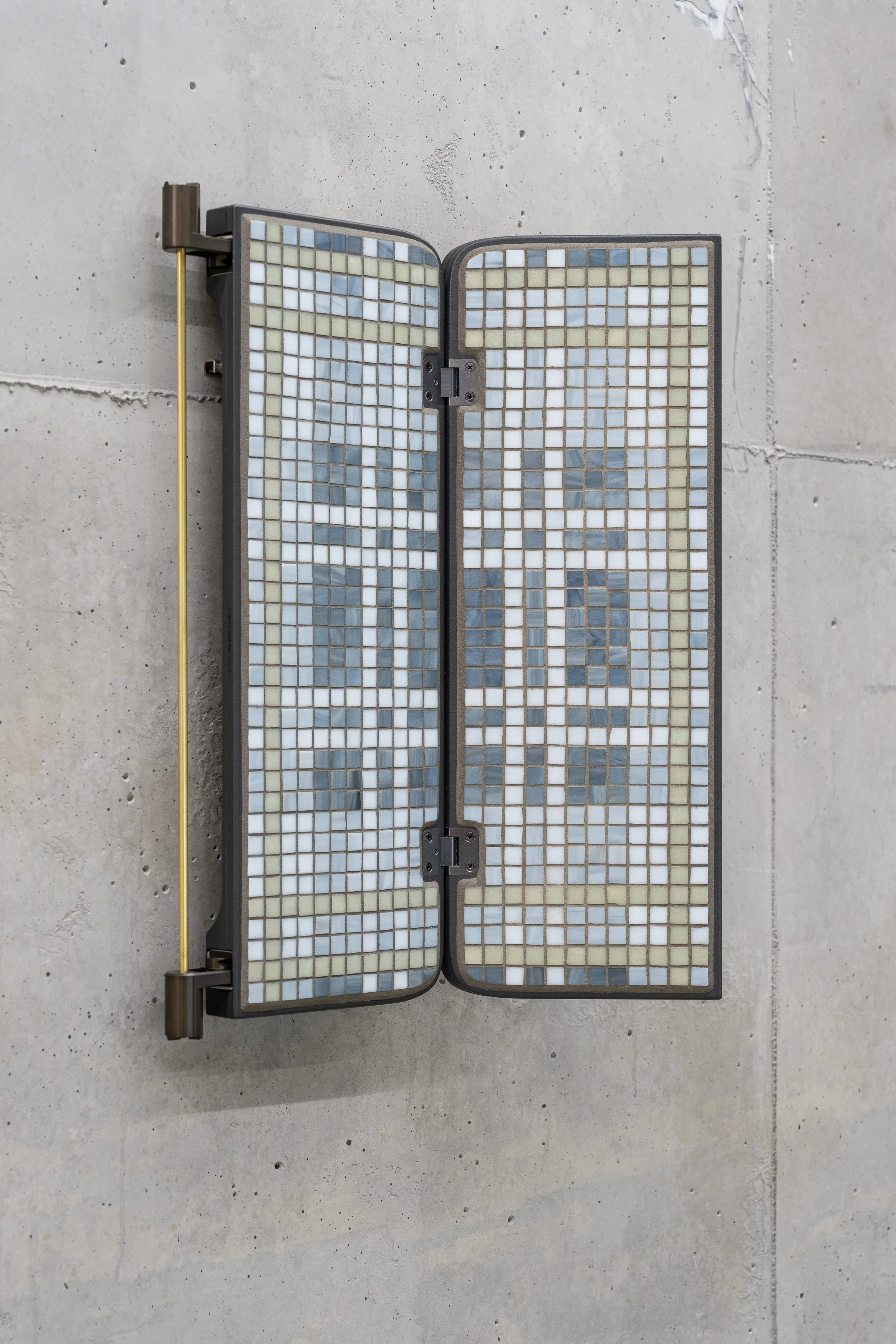
She was hungry and awake at strange hours, 2026. Aircraft tray table, glass mosaic, stone, aluminum and bronze. 54 x 34 x 18 cm. Image Courtesy of max goelitz. Photo by Dirk Tacke
That transformation of these objects often occurs through acts of ornamentation or aesthetic intervention. How do you think ornament changes the way we read an object, particularly one that was originally designed for efficiency?
I think ornament changes the speed at which we look at an object. A functional object is normally very direct. You understand what it is for and then almost stop looking at it. Ornament interrupts that relationship and asks you to spend more time with the object.
What interests me about ornament is that it carries information beyond function. It can hold cultural references, memories, traces of a particular period, or something very ordinary and personal. In the new works, glass mosaic becomes a way of translating textile structures into another material language. Plaid patterns from tablecloths, blankets, curtains, or upholstery are reconstructed through individual pieces of glass, so something associated with softness, warmth, and touch is transferred into a material that is rigid, fragile, and architectural.
I am interested in what happens through that translation. The pattern is separated from its original material and context, but it still carries a certain familiarity. You might recognize something in it without being able to identify exactly where that recognition comes from.
When these ornamental structures are then placed in relation to industrial objects, another shift happens. The object is no longer read only through efficiency and function. It begins to carry different histories and associations at the same time.
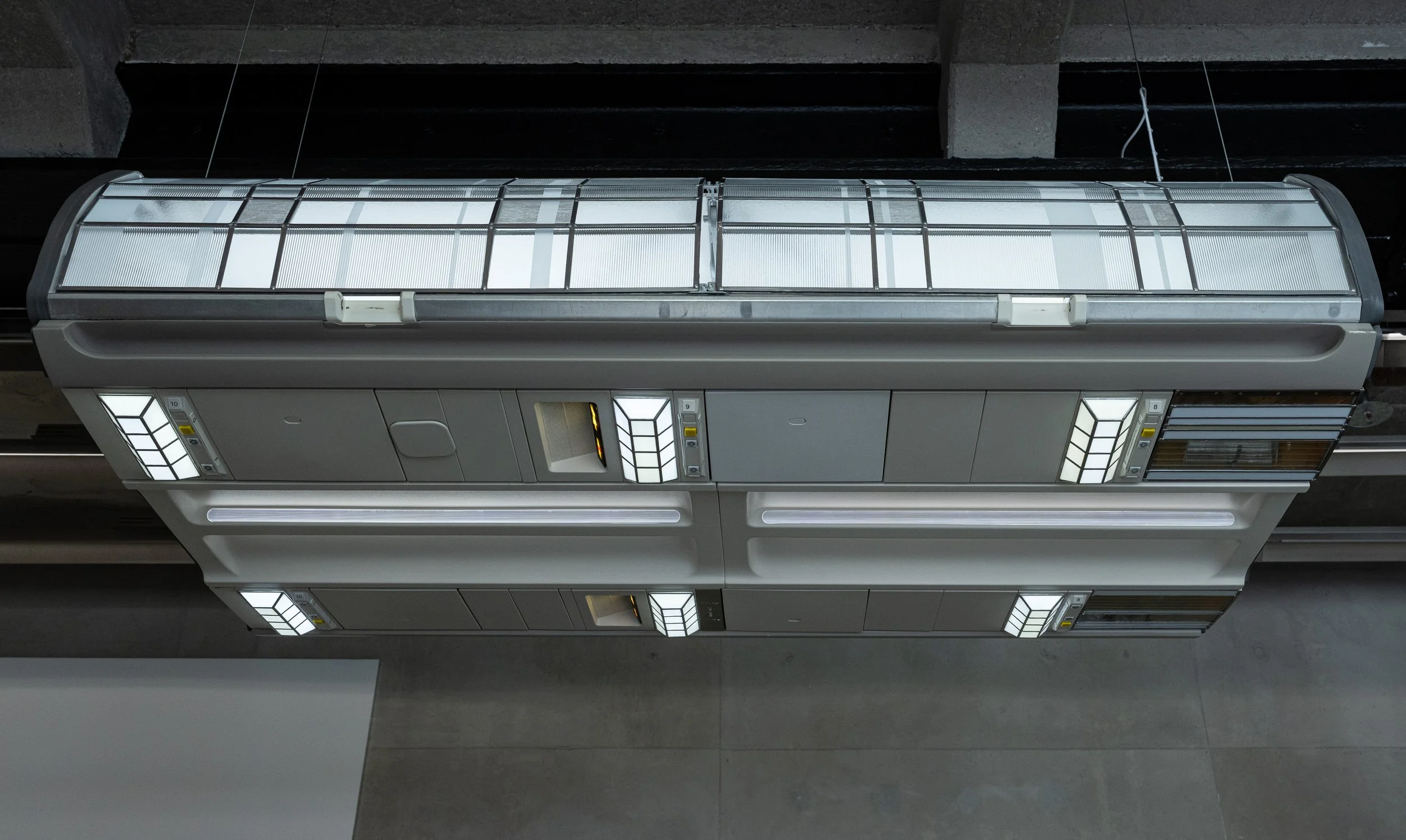
She slept better when nothing stayed still, 2026. Aircraft overhead compartment, stained glass, stainless steel, LED, 55 x 212 x 130 cm. Image Courtesy of max goelitz. Photo by Dirk Tacke
Historically, ornament has often been associated with memory, symbolism, and cultural identity, while infrastructure is associated with function and movement. How are you interested in bringing those two histories into conversation with one another?
I think - I am interested in bringing together two systems that seem to have almost opposite priorities. Infrastructure is designed around efficiency, movement, standardization, and repetition, while ornament can carry much more specific information about a place, a period, a culture, or a personal way of living.
But these spaces are actually never purely functional. Especially in airplanes, hotels, lounges, or trains, there is always a certain idea of hospitality. They want to welcome you and make you feel comfortable, which I sometimes find quite strange and interesting. They try to create something homey, but it is never really a home. It is domestic, but only to a certain degree.
Often it happens through very small hints. A particular lamp, warm colors on the wall, a blanket, a curtain, a certain upholstery pattern, or even a welcome drink. They borrow elements from places where we normally feel comfortable and translate them into a temporary and standardized environment. It is almost a simulation of domesticity, but just enough for the amount of time you are expected to stay there.
I think this is also where ornament becomes interesting to me. It is not only decoration. It can be part of how these spaces communicate comfort, care, or familiarity.
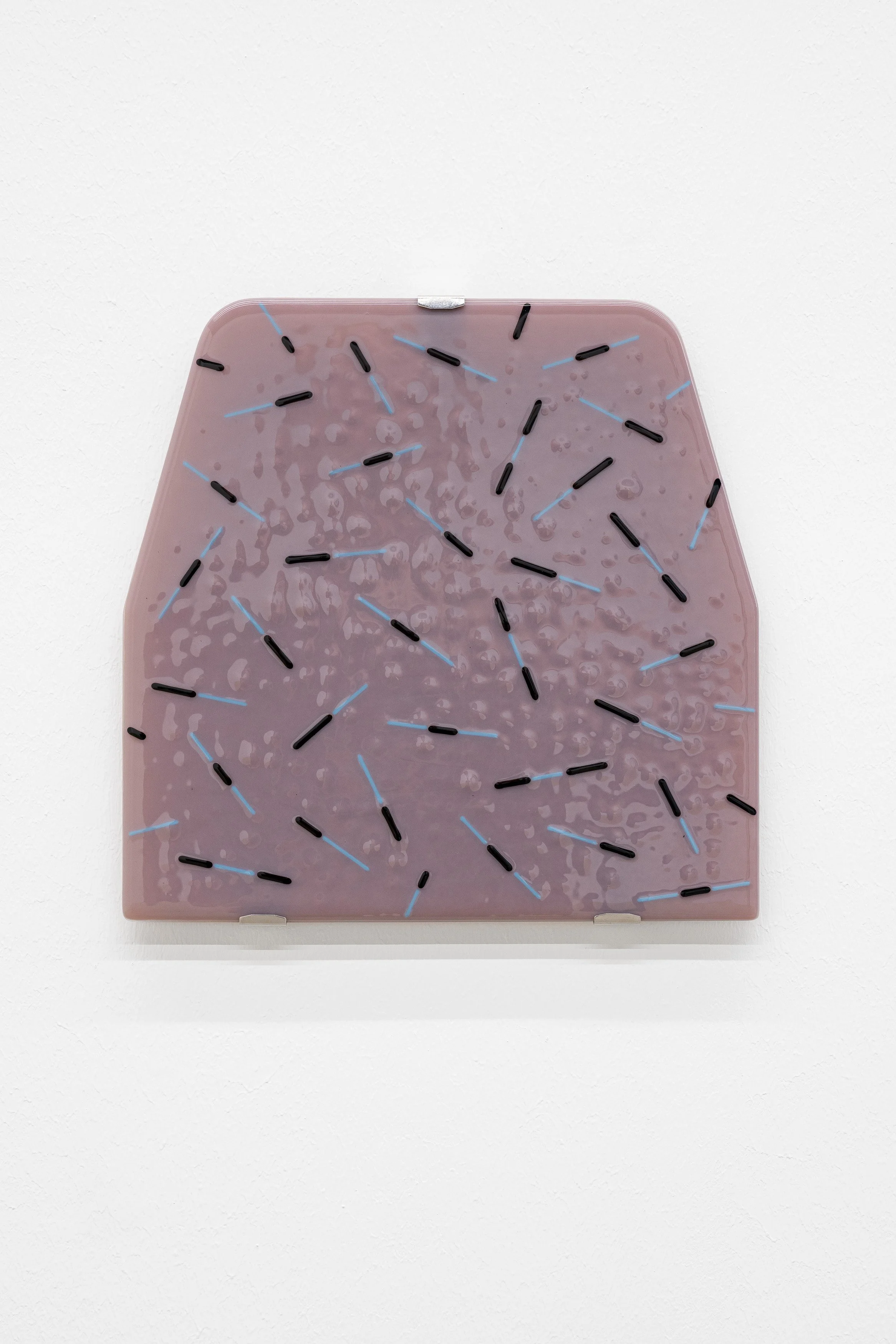
She thought the bread in the plastic bag looked sad, 2026. Fused glass, 29.5 x 30 x 1.2 cm. Image Courtesy of max goelitz. Photo by Dirk Tacke
In recent years, many people have become accustomed to existing across multiple places, languages, and cultural frameworks simultaneously. Do you think your work is responding to a broader condition of contemporary life, or does it remain rooted in more personal transferable experiences of displacement and mobility?
It definitely starts from my personal experience. I have been living outside Korea for many years and moving between different countries, languages, and cultural environments has naturally shaped the way I see things. But I don't think of the work as being specifically about my own displacement or migration.
For me, that experience is more like a lens through which I look at something that has become quite normal in contemporary life. We can live in one country, have family somewhere else, work with people in several different places, speak different languages throughout the day, and constantly move between different cultural references. You can feel very connected to several places at the same time without feeling completely located in any one of them.
I think this also changes how we build familiarity. You start collecting small habits, objects, images, tastes, and ways of living from different places, and they somehow coexist. I am interested in that condition because it is not necessarily about being lost between places. It can also be about developing a different, more flexible way of belonging. So the work begins from something very personal, but I hope it can stay open enough for other people to enter it through their own experiences.
If a transitional space with no permanence, such as an airport, can produce a sense of displacement and suspension, what public spaces make you feel most grounded, and what do you think creates that feeling?
For me, feeling grounded in a public space has a lot to do with a certain kind of anonymity. I actually feel quite comfortable in places where many different kinds of people come together and nobody really needs to know who you are or why you are there. A busy café, a park, a station, a market, or even a supermarket can give me that feeling.
I like when a place has a certain sense of hospitality, but it doesn't necessarily become personal. You are welcomed, there is a place for you to sit or stay, and you can feel comfortable, but there is no expectation that you have to form a personal relationship with the space or the people around you. I find that kind of distance quite comforting.
At the same time, repetition plays a role. When I return to the same café or walk the same street again and again, I start to know where I like to sit, how the light comes in, or how to move through the space without thinking about it. The place remains public and anonymous, but it becomes familiar through the body. Maybe for me, feeling grounded is somewhere between these conditions. I don't necessarily need a place to belong to me. I like being able to remain anonymous while still feeling welcomed and familiar with where I am.
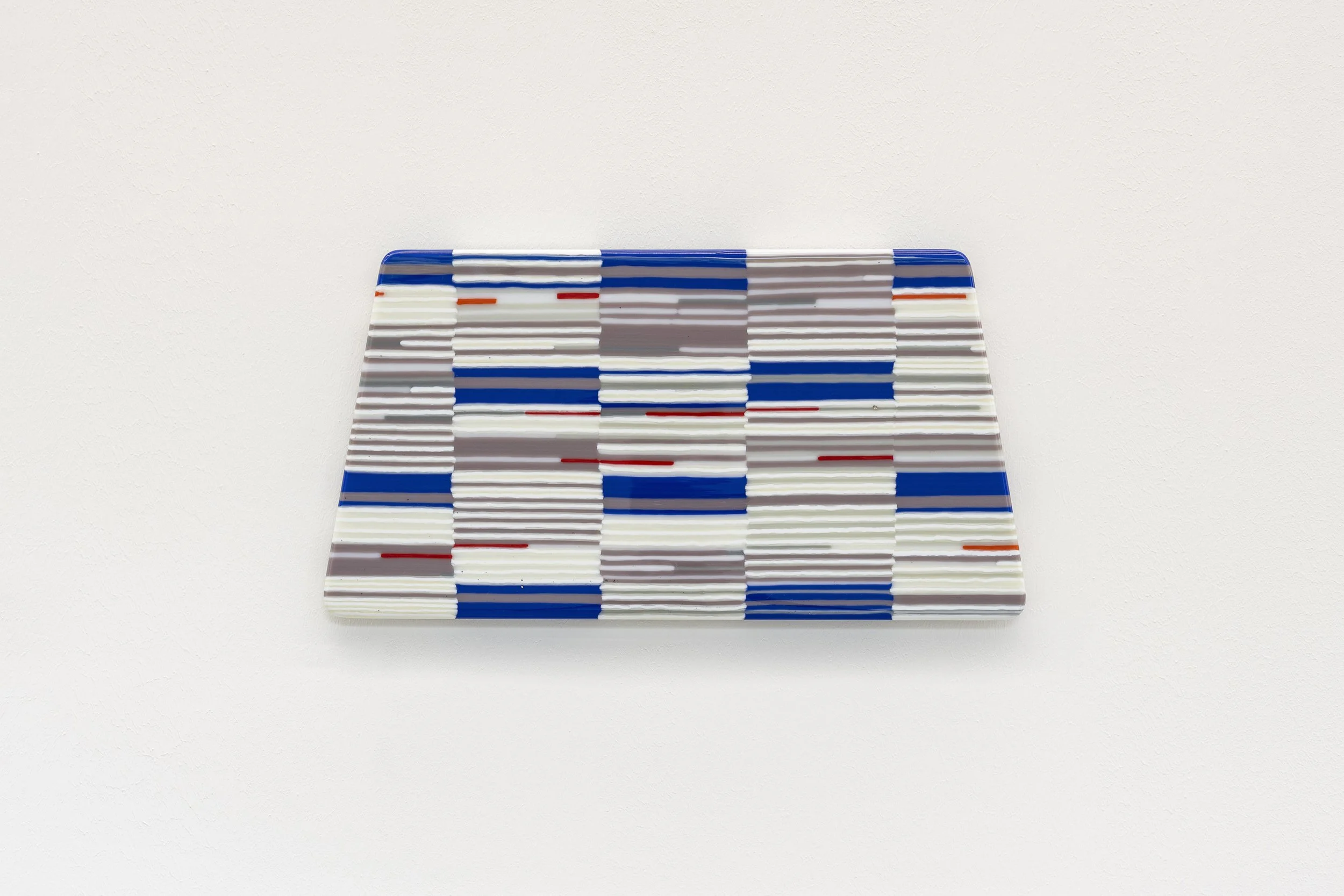
She remembered exactly what it felt like, 2026. Fused glass assembled from handcut strips. 22.5 x 43 x 1.2 cm. Image Courtesy of max goelitz. Photo by Dirk Tacke
Looking forward, where do you see this investigation leading? As your work evolves, are there new architectures, materials, or forms of transition that you feel compelled to explore?
I think I want to continue expanding this investigation rather than moving away from it. The airplane has been a very important architecture for me, but I don't necessarily define my interest through transportation itself. I am more interested in spaces and conditions that exist somewhere in between, places that we inhabit for a certain amount of time without necessarily settling into them. That could be an airplane or a train, but also a hotel, a temporary apartment, a waiting space, or other architectures that hold us between one condition and another.
On a broader level, I am interested in how the development of transportation has changed our sense of living and belonging. We can move across enormous distances much more easily than before, and this allows us to maintain relationships with several places at the same time. You can live in one country, have your family somewhere else, work in another place, and continue moving between them. I think this changes what it means to live somewhere, what we consider home, and how we attach ourselves to a place.
I also want to look more closely at the psychological level of these environments and how they are designed. Nothing really comes from nothing. There is always a thought behind why a space looks or feels the way it does, how the body is guided through it, what kind of light is used, what colors or materials surround us, and how we are expected to behave within it. These decisions can seem very subtle, but they shape our experience emotionally and physically.
I am also interested in structures we don't normally see, things like airflow, pressure, vibration, structural stress, or other engineering information embedded within these environments. These invisible systems are constantly shaping our physical experience, and I want to explore how they can be translated into glass, pattern, light, or ornament. So I don't really see a completely new direction ahead. It feels more like the existing landscape is becoming wider. Transportation is one way into it, but the larger question for me is about these spaces in between, and how the systems and environments we move through are changing our sense of distance, intimacy, home, and belonging.
To learn more about Ju Young Kim visit her website and Instagram.