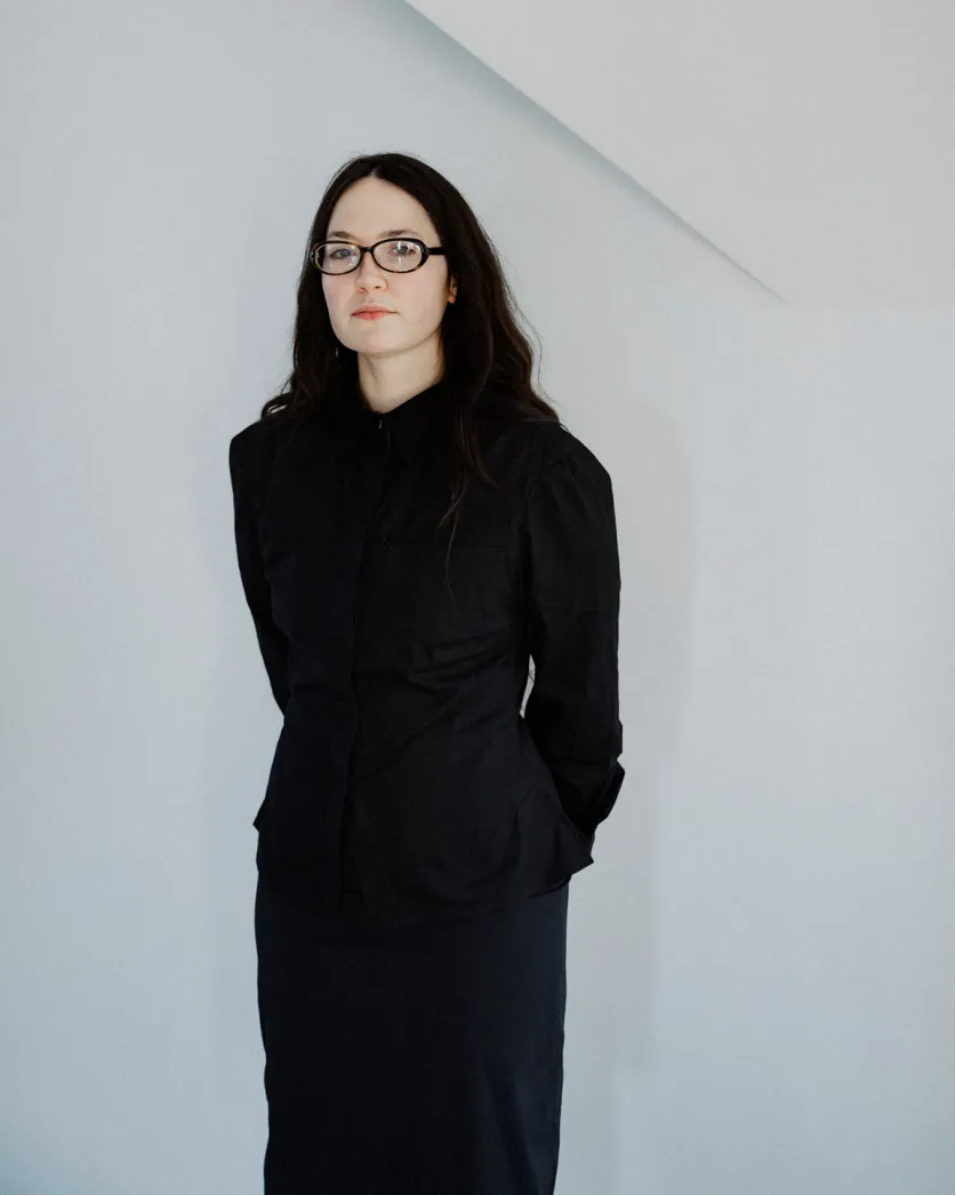
Portrait of Isabelle Frances McGuire, 2026. Courtesy of the artist.
This conversation originally featured in Artforum, Novmeber 2026.
Isabelle Frances McGuire investigates the gap between historical fact and invention. Working across sculpture, painting, installation, robotics, and digital media, they pull from an assortment of source materials, including online libraries and archives, manuscripts, books, and video games, to explore how familiar images take on new lives over time.
In previous bodies of work, McGuire has drawn on Hollywood monsters, historical figures, and video game characters, using their familiar forms to explore how mythology and cultural memory take shape through material objects. For their Renaissance Society exhibition (December 7, 2024–February 9, 2025), McGuire created Symbolic Birth Cabin Unit—a sculptural copy of Abraham Lincoln’s birthplace using photographs and reconstructed imagery—to question how American history is remembered and romanticized. In their contribution to the 2026 Whitney Biennial, McGuire presented the series “Satan in America and Other Invisible Evils: Experiments in Public Sculpture.” These sculptures similarly transformed existing imagery into physical form, using CT scans of human bodies as well as character models from first-person-shooter video games.
In “Joy Is a Puppet,” their most recent exhibition, at Bel Ami in Los Angeles (on view through November 28), McGuire further explores their interest in the occult with an examination of the Salem witch trials, a chapter of American history especially shaped by rumor, religion, and fear. Bringing together painting, bronze sculptures, handwoven baskets, and a playable first-person video game developed on the platform Unity, the exhibition moves between the physical and virtual worlds, allowing familiar historical narratives to take on unexpected forms.
—Phillip Edward Spradley
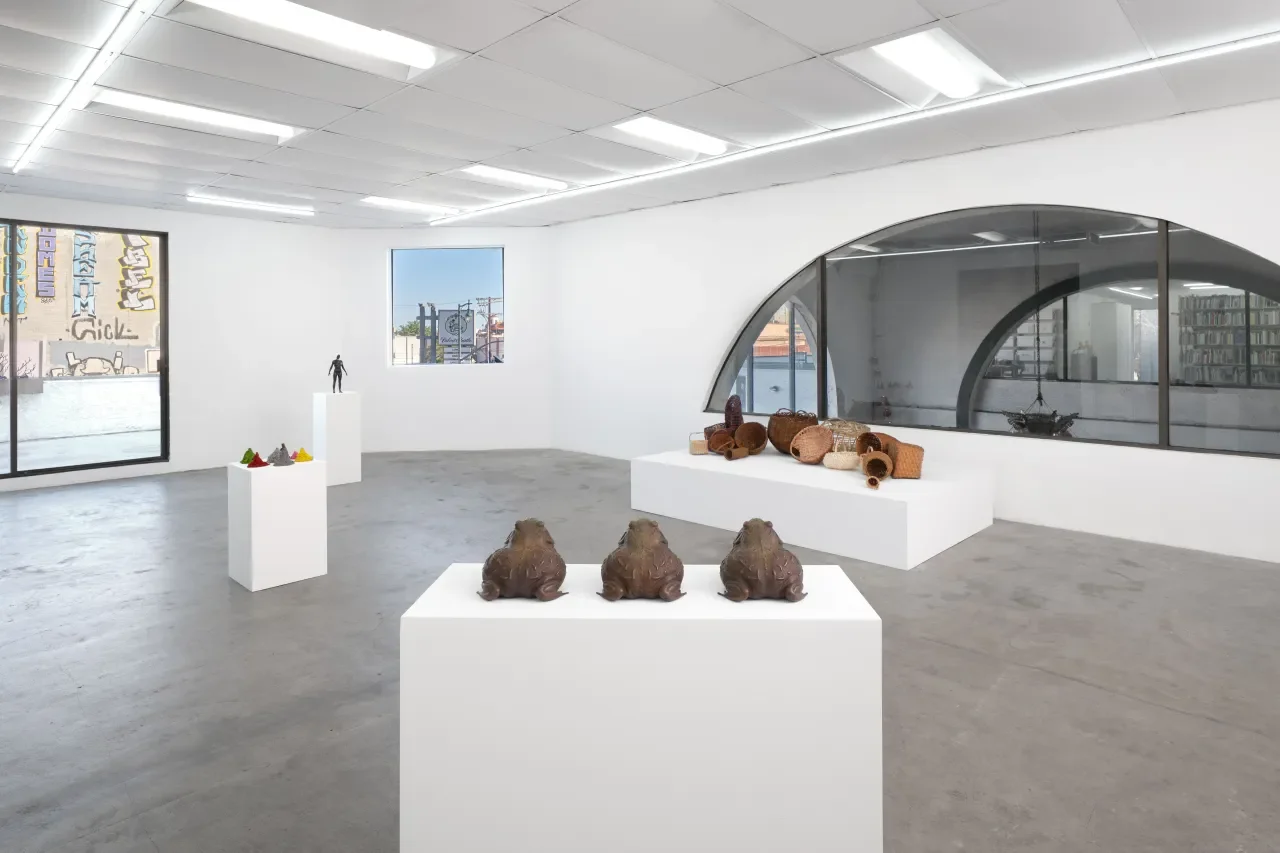
View of “Isabelle Frances McGuire: Joy is a Puppet,” 2026, Bel Ami, Los Angeles.
WHEN DEVELOPING AN EXHIBITION, I create a semiprivate logic-based system in the hopes of generating unexpected and uncontrolled results. Lines of logic from the previous exhibition are continued, challenged, or collaged into the next one with the aim of leading to a temporal rupture or transformation of how I understand my reality. In that way, my solo exhibition at King’s Leap informed my contribution at Artists Space, which led to strategies used in my Renaissance Society show, “Year Zero,” which influenced my contribution to the Whitney Biennial, which informed the Bel Ami show.
Not only are my materials found objects or 3D models that I have modified, strategies are also edited and repurposed. For “Year Zero,” my focus was exploring historical reenactment as an arena for play. This exhibition was highly informed by strategies used by video game publisher Activision in creating the Call of Duty franchise and the involvement of the US military in its development. The latter acts as a consultant on the realism of tactical-mission execution, gear, weapons, and vehicles. That means that when you are shooting at people from a helicopter, in the game, Activision has spent resources to make that experience as “real” as possible for you while eliminating any serious consequence for that act. There are six WWII-themed COD games. What is the value in retelling D-Day with increasingly high-quality graphics? To emphasize the idea that America is a country that “wins”?
That led me to ask the question, when people are at the short end of the stick, do these stories lead them to believe that they too could be winners? Or simply that there is another way of living? Are they greeted by “possibility”? Because I am also looking to be met with possibility and an alternative way of living. Activision has tested this strategy of making video games and confirmed it to be an effective method for both entertainment and military recruitment, the extraction of capital, and historical revision.
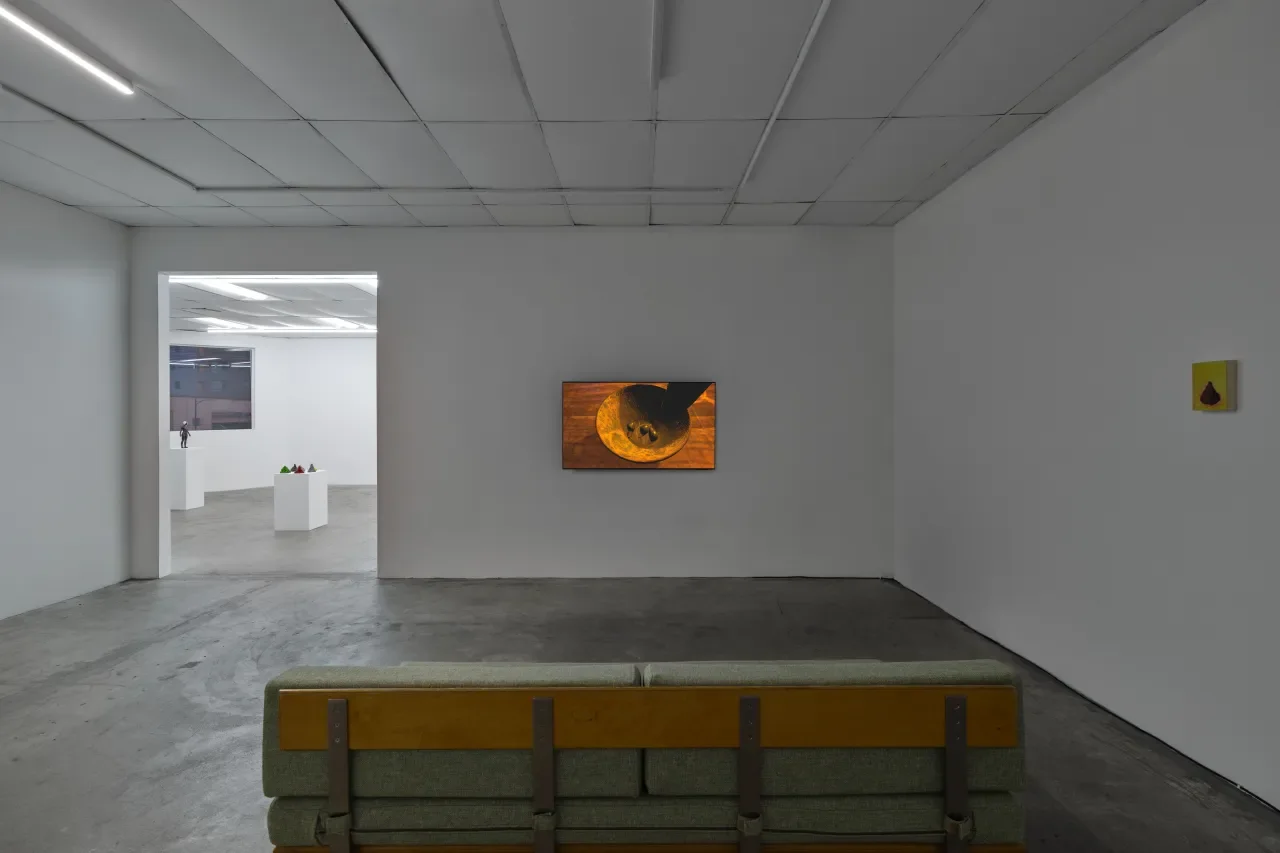
Joy’s Hands, 2026, single player video game, 20 minutes.
Since the methods that Activision uses to make these games have a genuine effect on culture and the decisions of everyday people, I wanted to employ the same methodology for artmaking. Could I use historical reenactment, the retelling of American myths, simulation, and varying levels of realism to create an aesthetic experience as effective as Call of Duty? Probably not, but I did try.
This attempt was meant to open up my project to experimentation, and through the process of making the Chicago exhibition, I landed on a new line of inquiry. Rather than experiments in historical reenactment and failed replication, all of the elements in “Year Zero”—the cabin, the star, the banner, the grave, Betsy Ross, the medical advertisement, and the monsters—revealed themselves to be powerful symbols that I was arranging in space to create something new.
I thought to myself: “Where else does this kind of logic exist, where the arrangement of powerful symbols is meant to have an effect on the circumstance of one’s life?” The answer was witchcraft.
I was looking for something that could splinter how I conceive of my work and transform me in the process of making, subverting my own expectations of what artmaking could be, what I could be, and how I contend with time and space. Sometimes my process can feel like shaking a Yahtzee cup and letting the dice tell me how to behave. This is how I’ve made it to where I am now.
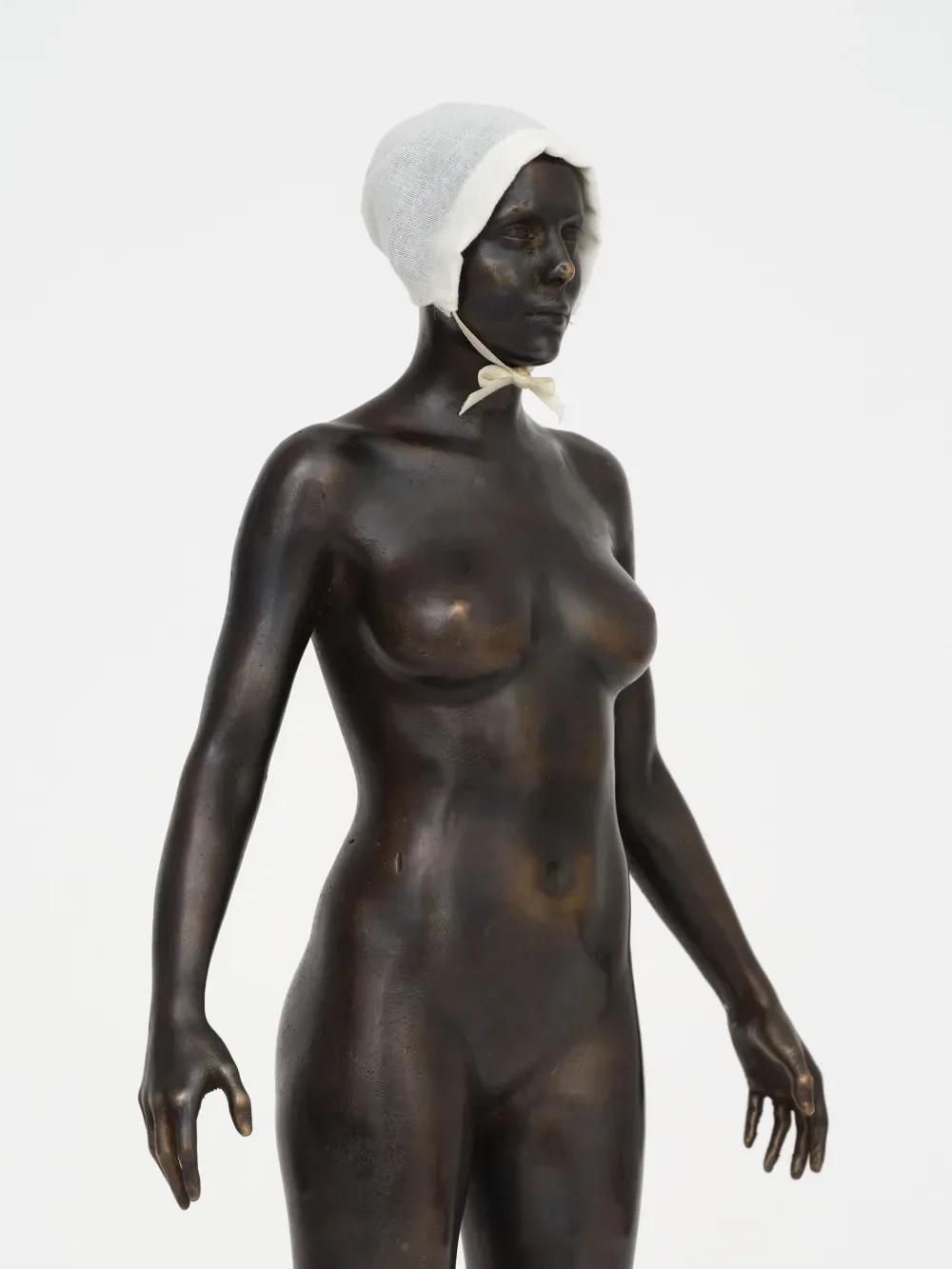
Joy is a Puppet, 2026, bronze, cloth bonnet, 15 x 7 x 2 1/4”
I unexpectedly entered a new chapter of my practice. Over the past two years, I’ve become completely consumed by the formation of the game design collective called Recurseware and the development of our game Joy (working title). Members of this collective include me, game designer and artist Will Lee, writer and artist Max Hart, and artist and member of the band Suicide Moi Liz Vitlin.
Creative activities that require me to step away from this project agitate me. Every alternative project that I begin has Joy in mind. When I exercise, I do it so I can think better for Joy. I eat to energize myself for Joy. There is a palpable difference between the way I was working previously and how I will be working moving forward.
“Joy Is a Puppet” at Bel Ami is a product of this transformation. The show includes the debut of Recurseware’s first collaborative game, Joy’s Hands, created by me and Will Lee. All works in this exhibition stem from the world that we are building. Our world is a virtual replica of the town of Salem, Massachusetts, during the infamous witch trials, in which our protagonist Joy lives. The town is explored from Joy’s perspective: She’s accused of witchcraft and suffers from ergot poisoning and a severe blow to the head that alters her perception of reality. This is the place my sculptures are coming from, our bastard replica of the town as described in the seventeenth century. Where previously I sought out and altered open-source digital or ready-made replicas of paraphernalia from popular media, I’m now creating a digital copy of Salem from which I’ll extract material to create new sculptures.
At Bel Ami, the sculpture Joy Is a Puppet stands in opposition to her Sisters, three open-mouthed bronze frogs arranged in a row. There is a saying about bullfrogs: “They will eat whatever they can fit in their mouths.” Joy Is a Puppet is a bronzed figure of a nude Joy wearing just a bonnet. Standing at a scale of fifteen inches, she’s large enough for all three Sisters. Sitting nearby is Lucky Piles, a work made of epoxy putty, PLA, resin, and flocking, resembling biomatter that could be left over from the smoking, eating, pooping, breeding, and pile-making activities of the Sisters.
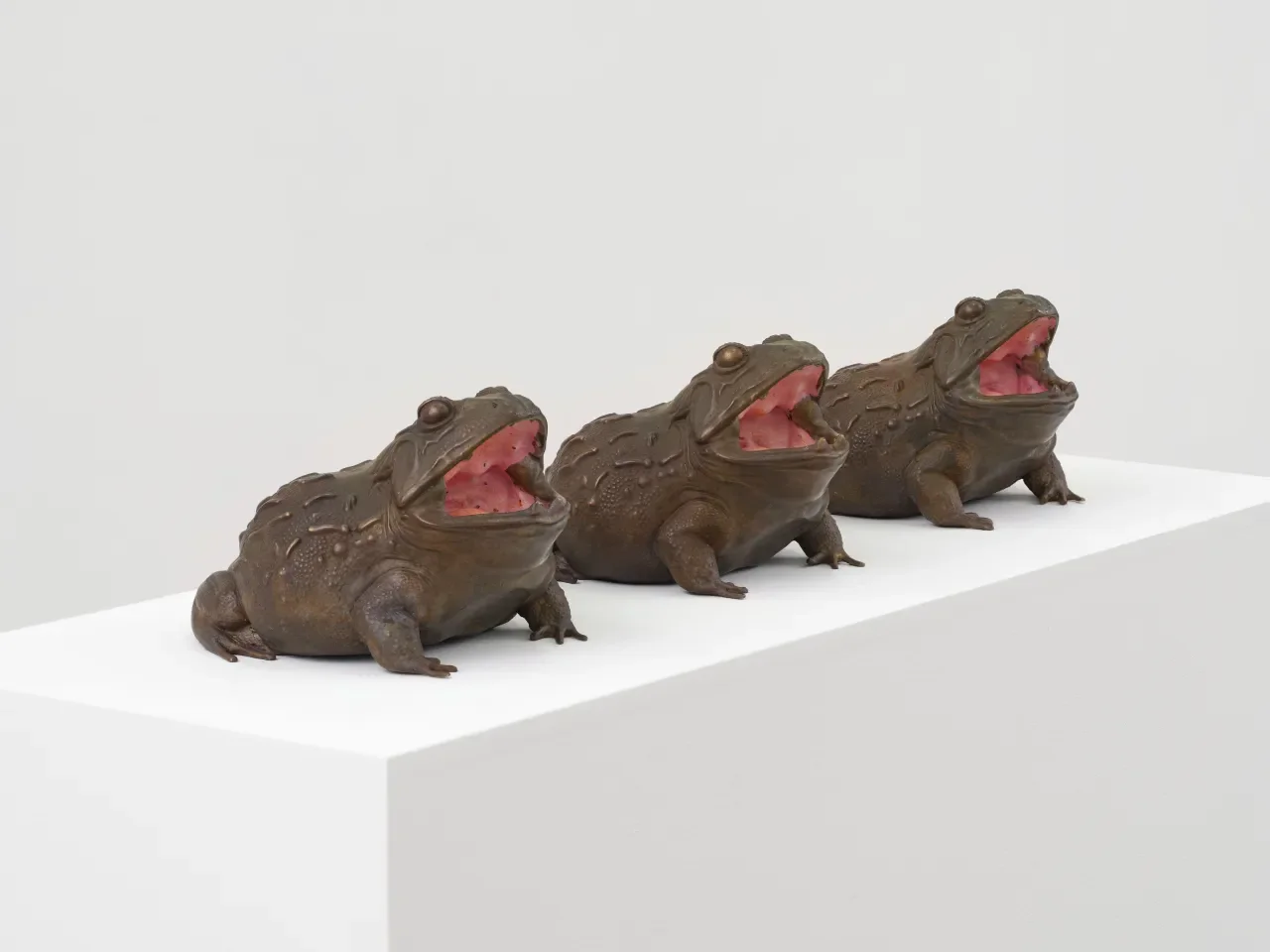
Sisters, 2026, bronze, paint, 6 x 8 x 8” each.
Across from Sisters and Lucky Pile, on a short rectangular pedestal, Tableau features a cornucopia of baskets I made from historical documents and craft manuals. They are all arranged on a plinth that looks suspiciously like a display you would find at an underfunded historical society. The corn-shaped baskets are directed at the wide-open mouths of a pile of interlaced reeds, hoping to enter. I taught myself basket weaving for this exhibition and considered my daily weaving practice an exercise in historical reenactment.
In the adjoining room, you are greeted by Idiot Woman, a messy bust of Joy with a fat dent in her head. On the wall is a portrait of two Sisters smoking cigarettes; their ash makes Lucky Piles. A couch and a game controller sit in the middle of the room facing a mounted television. Dark synth music fills the entire gallery while you play Joy’s Hands. In the game, you are a young seventeenth-century woman who has been locked in a room by your father. You have done something bad and must be punished. To quell your loneliness, you step through a ritualized spell: You summon a demon friend to play a game of cat’s cradle.
–As told to Phillip Edward Spradley
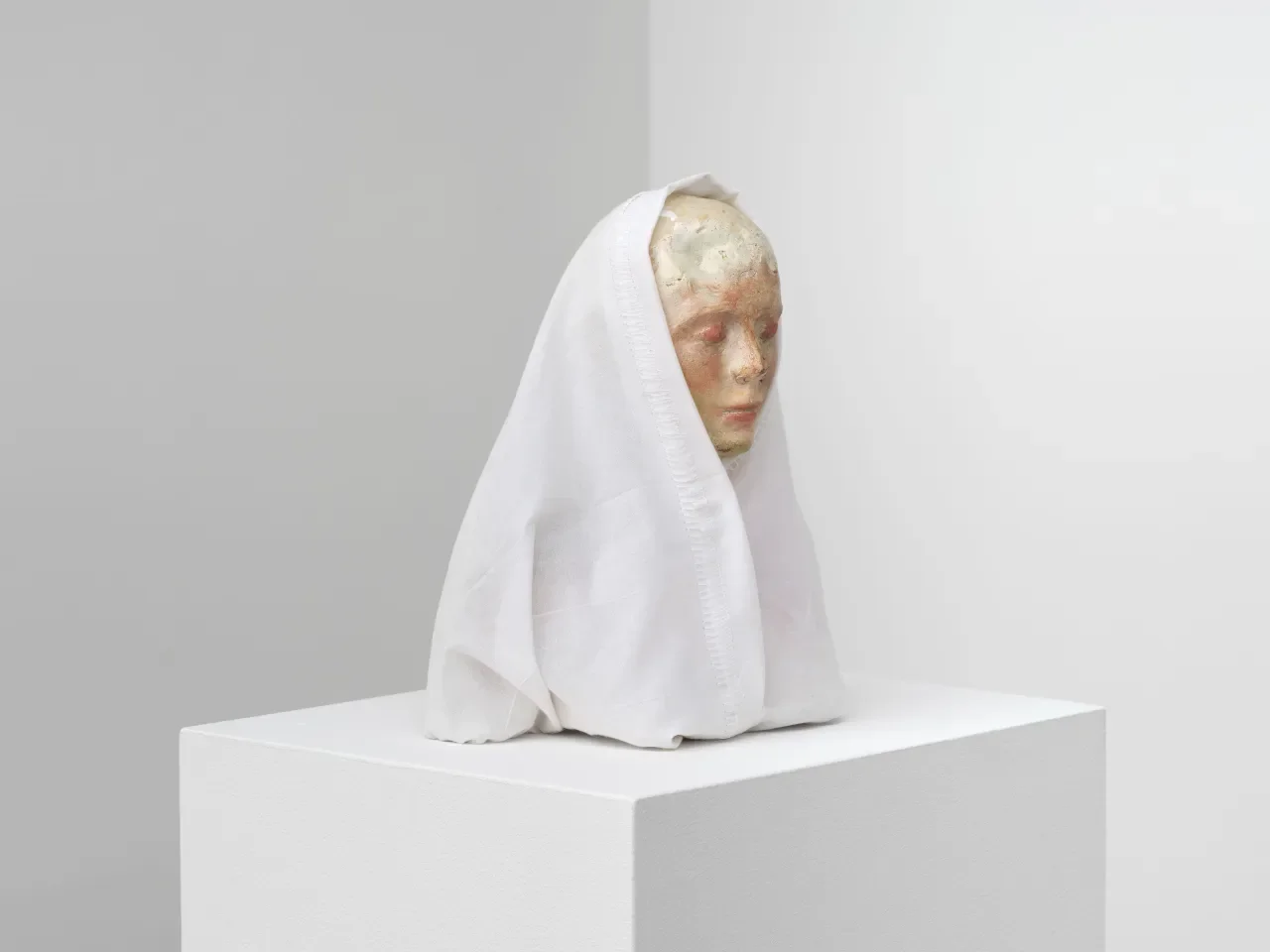
Idiot Woman, 2026, epoxy putty, cotton, pastel, 12 1/2 x 11 1/2 x 6”
To learn more about Isabelle Frances McGuire visit their Instagram